
Digital Charisma and the Illusion of Indian Sovereignty: Is Joseph Vijay Qualified to Govern a Superpower as Prime Minister?
In a democratic system, constitutional law permits any citizen over the age of twenty-five to contest elections and, with parliamentary backing, ascend to the position of Prime Minister. While legal eligibility is an absolute right, leadership merit to govern a massive, nuclear-armed nation capable of becoming a global superpower is weighed on an entirely different scale. In the contemporary political landscape, the political entry of actor Joseph Vijay and the hyper-digital campaigns surrounding him have ignited a fierce discourse that transcends state politics, questioning his ultimate capability to lead the central governance of India. This analysis interrogates a core moral question raised by public intellectuals: can cinematic glamour and curated social media personas ever translate into the geopolitical and institutional capacity required to manage a diverse superpower?
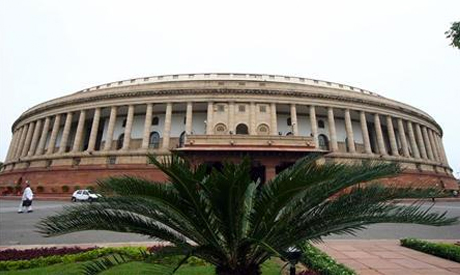 Parliament House, New Delhi — the seat of India's central governance, and the office at the heart of this debate over merit.
If a student in the tenth grade declares, "I want to become the Prime Minister of this country," we can appreciate their youthful ambition. However, actualizing that dream demands an arduous journey of public service, a deep understanding of India's pluralistic fabric, and confronting the raw struggles of ordinary citizens across the subcontinent. Attempting to leapfrog directly into the highest executive seat of a nation without this foundational grounding in national security, fiscal management, and international diplomacy contradicts the core virtues of democracy. Aspiration is not a crime, but expecting to hold the steering wheel of a complex superpower without cultivating the prerequisite merit remains deeply problematic in national politics.
Socio-political issues and state survival are intrinsically tied to the existence of over a billion citizens, and therefore, public thinkers and neutral observers possess the democratic right to scrutinize those who vie for central governance. Criticizing a celebrity aspirant by stating they lack the maturity to lead a massive geopolitical entity like India is a healthy democratic exercise. The critics' argument is straightforward: there is no fault in being an actor, but if you intend to transition into a national leader, you must first labor among the diverse masses of the country and understand structural international politics instead of exhibiting an overnight craving to capture supreme executive power.
Today, a massive corporate PR machinery is active, leveraging platforms like Instagram and YouTube Reels to manufacture consent for Vijay across digital spaces. A significant portion of the young electorate — specifically first-time Gen Z voters who lack exposure to geopolitical history or ideological training — are vulnerable to these highly stylized photographs and edited clips, mistaking digital viral status for statesman capability. Allowing social media algorithms to dictate the Prime Minister of a nation threatens to commodify national sovereignty itself, making it the urgent duty of public intellectuals to dismantle these artificial digital narratives and foster genuine political consciousness among the youth.
To fully comprehend that the capacity to govern a rising global superpower cannot be measured by cinematic stardom, one must meticulously analyze the decades-long trajectories of India's contemporary political titans, Narendra Modi and Rahul Gandhi. Prime Minister Narendra Modi did not ascend to the nation's highest executive seat overnight; his journey spans several decades of foundational grassroots work, beginning as an ordinary party worker, traversing the length and breadth of India as an RSS pracharak, and serving successfully as the Chief Minister of Gujarat for over a decade to prove his institutional governance before claiming the premiership.
On the other end of the political spectrum, Leader of the Opposition Rahul Gandhi, despite his dynastic Nehru-Gandhi lineage, spent more than twenty years as a Member of Parliament learning the mechanics of legislation, endured consecutive electoral defeats and severe political character assassinations, and physically marched thousands of kilometers from Kanyakumari to Kashmir during the 'Bharat Jodo Yatra' to directly absorb the raw realities of the masses, thereby earning his current stature as a mature statesman.
When measured against the scale of such seasoned political figures, public intellectuals argue that Joseph Vijay's political merit remains severely uninitiated. He possesses neither the theoretical depth nor the extensive grassroots experience required to navigate India's complex foreign policies, nuclear defense strategies, global economic inflation, and delicate center-state federal dynamics. Confronted by the colossal political endurance of leaders like Modi and Rahul — who have bled in the arena of grassroots struggle and parliamentary governance — relying solely on theatrical silver-screen dialogues and corporate Instagram PR algorithms to eye the Prime Minister's chair of a diverse superpower can only be viewed as an unearned ambition. The Prime Minister's chair of a nation grappling with global economic inflation, federal relations, border security, and international diplomacy is not a fictional cinema stage designed for theatrical dialogues. An image-driven politics devoid of grassroots national experience, sacrifice, and ideological depth will inevitably regress the progressive future of the country. Until a candidate proves their mettle through consistent grassroots struggles and national public service, their leadership remains confined to the illusions of the digital world.


0 Comments